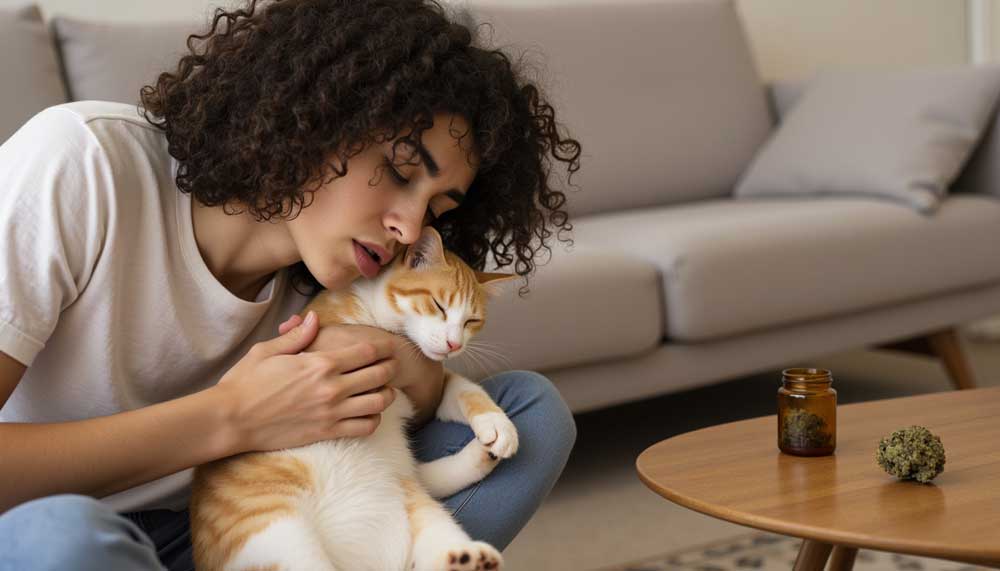
If you’ve ever lit up around your cat or worried about them sneaking a bite of your edible—you’re not alone. More and more pet owners are asking: how does weed affect cats?
While cannabis can be relaxing (or even medicinal) for humans, it’s not the same for pets. Cats have very different physiology, and even small amounts of THC can cause distress—or worse.
In this article, we’ll explore:
• What happens if a cat is exposed to cannabis
• Why THC and CBD affect animals differently
• What symptoms to watch for
• And what to do if your cat gets into your stash
Let’s clear the smoke and get the facts straight.
Let’s get straight to the point: THC is toxic to cats. While some pet owners may think it’s funny to let their cat “get high,” the reality is very different—and often dangerous.
So, how does weed affect cats? It depends on the form, the dose, and the route of exposure, but here’s what the science (and vets) say:
Cats, like humans, have an endocannabinoid system, but it’s much more sensitive. THC can overload their receptors and cause a range of unpleasant symptoms—especially if they ingest it in concentrated forms like edibles, oils, or resin.
Even small amounts can be toxic, particularly in smaller or older cats.
If you’re wondering how does weed affect cats, one of the clearest answers lies in the symptoms they show after exposure. Whether your cat has ingested cannabis or inhaled secondhand smoke, there are some common signs that indicate something’s wrong—and recognizing them early can make all the difference.
If your cat has been exposed to THC, you might notice:
• Lethargy or excessive drowsiness
• Loss of coordination (wobbly walking)
• Drooling or vomiting
• Dilated pupils
• Disorientation or confusion
• Excessive vocalization (meowing or yowling)
• In severe cases: tremors, seizures, or coma
Some symptoms may appear mild at first and worsen over time, especially with edible ingestion—where absorption is slower but longer-lasting.
Yes. Even if your cat isn’t ingesting cannabis directly, secondhand smoke can still affect them. Their lungs are smaller, and they’re more sensitive to air quality, especially in enclosed spaces.
Never blow smoke in a pet’s face. It’s not a joke—it’s a health risk.
Even the most careful pet owners can have accidents. A dropped edible, an open jar, or a cloud of secondhand smoke—things happen. And in those moments, it’s normal to panic and wonder: how does weed affect cats, and what should I do if mine got into my stash? Here’s what you need to know:
Panicking won’t help your pet. Cannabis toxicity is rarely fatal in cats, but it can be very uncomfortable and, in some cases, serious.
If you saw your cat ingest weed (or suspect they did), don’t wait for symptoms—take action immediately.
Describe what happened as clearly as you can:
• What type of cannabis was it? (flower, edible, oil, etc.)
• How much was ingested or inhaled?
• How long ago did it happen?
• What symptoms, if any, is your cat showing?
A vet can advise you whether to monitor at home or bring your pet in for observation or treatment.
If your vet advises home monitoring:
• Keep your cat in a quiet, dimly lit room
• Remove stimulation (noise, bright lights, other pets)
• Stay close and monitor breathing, coordination, and alertness
• Offer water—but don’t force them to eat or drink
Never try to “make your cat vomit” unless specifically told to do so by a vet. This can cause more harm than good.
Most cats will recover fully within 12–24 hours, depending on the dose and form. But a follow-up check is a good idea, especially if symptoms were strong or prolonged.

Now that we know how weed affects cats and the risks involved, let’s talk prevention. A few small changes can go a long way in keeping your furry friend safe.
• Edibles are especially dangerous: they smell like food and often contain chocolate or xylitol—both toxic to cats.
• Keep flowers, oils, vapes, and tinctures in sealed containers stored in high cupboards or locked drawers.
• Don’t forget about ashtrays, grinder trays, and half-smoked joints—cats are curious and can lick or nibble anything that smells interesting.
• Wipe surfaces where cannabis may have been prepped or consumed.
• Don’t leave crumbs, resin, or rolling paper scraps behind.
• If you vape or smoke indoors, ventilate the room well before letting your cat back in.
If you frequently use cannabis, consider keeping a dedicated room or area your cat doesn’t have access to. This is especially useful for smoke sessions or making edibles.
Let’s bust some common myths floating around forums and TikTok:
❌ “Cats like getting high.”
False. The confused, sluggish behavior some people interpret as “relaxed” is actually a sign of distress. Cats can’t consent, and THC is a toxin to them.
❌ “My cat’s fine around smoke—it doesn’t affect them.”
Secondhand smoke can cause respiratory irritation, anxiety, and long-term damage. Just because they’re not coughing doesn’t mean they’re okay.
❌ “A little edible won’t hurt.”
Even a tiny amount of an edible—especially one with chocolate, sugar alcohols, or butter—can be dangerous. Edibles are often more potent and stay in the body longer.
If you end up at the vet clinic, knowing what to expect can help you stay calm. Here’s how professionals typically diagnose and treat cannabis exposure in cats:
• There’s no rapid test for THC in cats, so vets rely on:
• Your report (be honest—seriously, they’ve seen it all)
• Observable symptoms like disorientation or loss of coordination
• Heart rate, breathing patterns, and neurological signs
Don’t worry about judgment—vets just want to help your cat recover.
In most cases, treatment is supportive, and may include:
• IV fluids to keep your cat hydrated and help flush out the THC
• Activated charcoal, if ingestion was recent, to prevent further absorption
• Anti-nausea meds, sedatives, or seizure control, depending on symptoms
• Quiet monitoring in a safe environment
Most cats recover well within 12–24 hours with proper care. Early action is key.
So, how does weed affect cats? The short answer is: not well—at least not in the way it affects humans. While THC might chill us out or boost creativity, in cats it can cause confusion, discomfort, or even dangerous reactions.
The good news? Most cases of cannabis exposure in cats are treatable, especially when caught early. But prevention is always better than treatment. Keep your stash secured, your sessions pet-free, and when in doubt—call your vet.
[sp_easyaccordion id=”18533″]